Christmas – The gift nobody sent
A holiday gift, checking and empathy
Parent and teacher guide · questions and activities
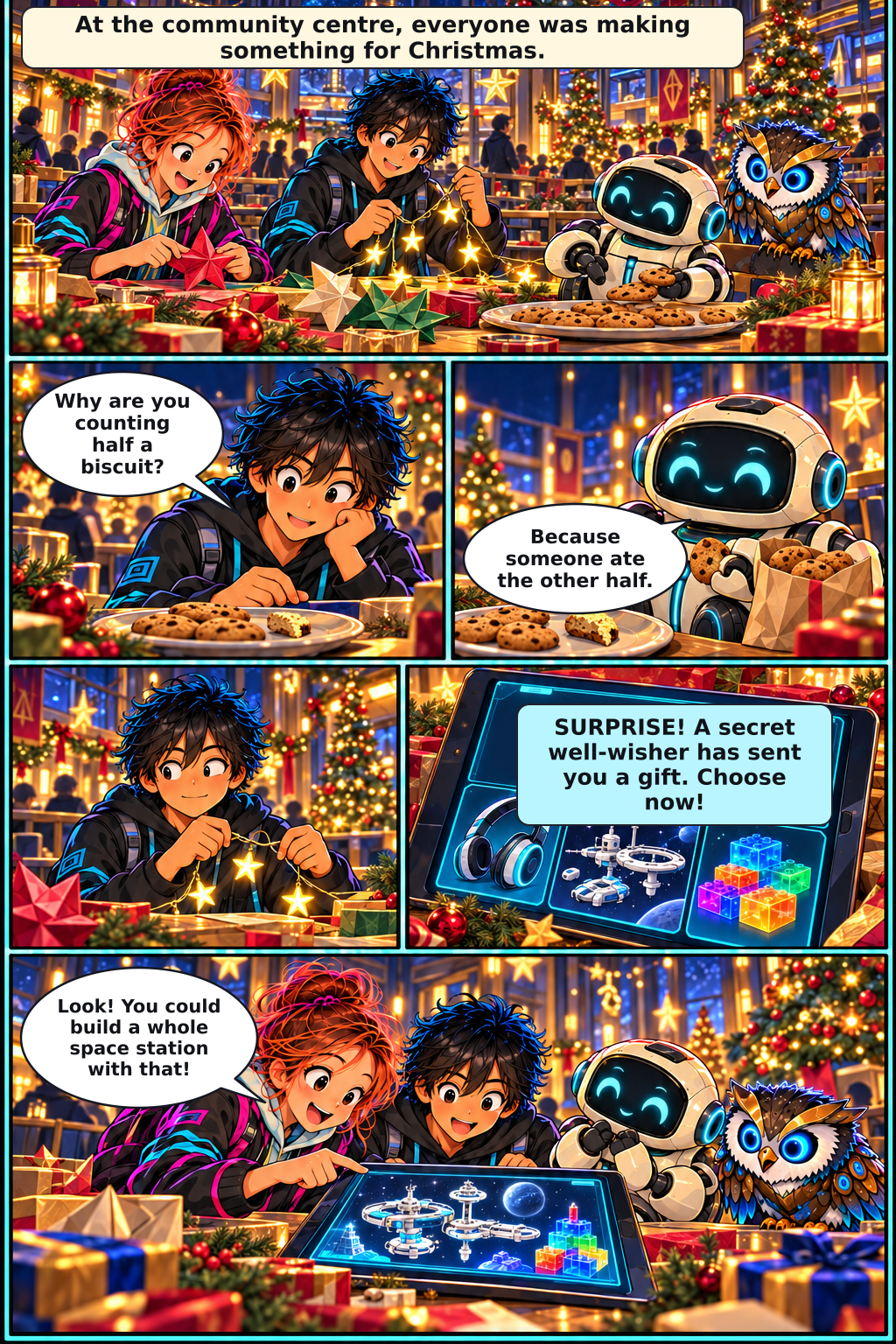
The Gift Nobody Sent
Discussion guide for teachers and parents
In class · 15 minutes after reading
Aim
Recognising pressure and checking a gift offer that asks for information or money.
0–3 minutes: recall an important scene. 3–10 minutes: discuss the questions. 10–15 minutes: try the joint activity and invite everyone to name a possible next step.
Discussion starters
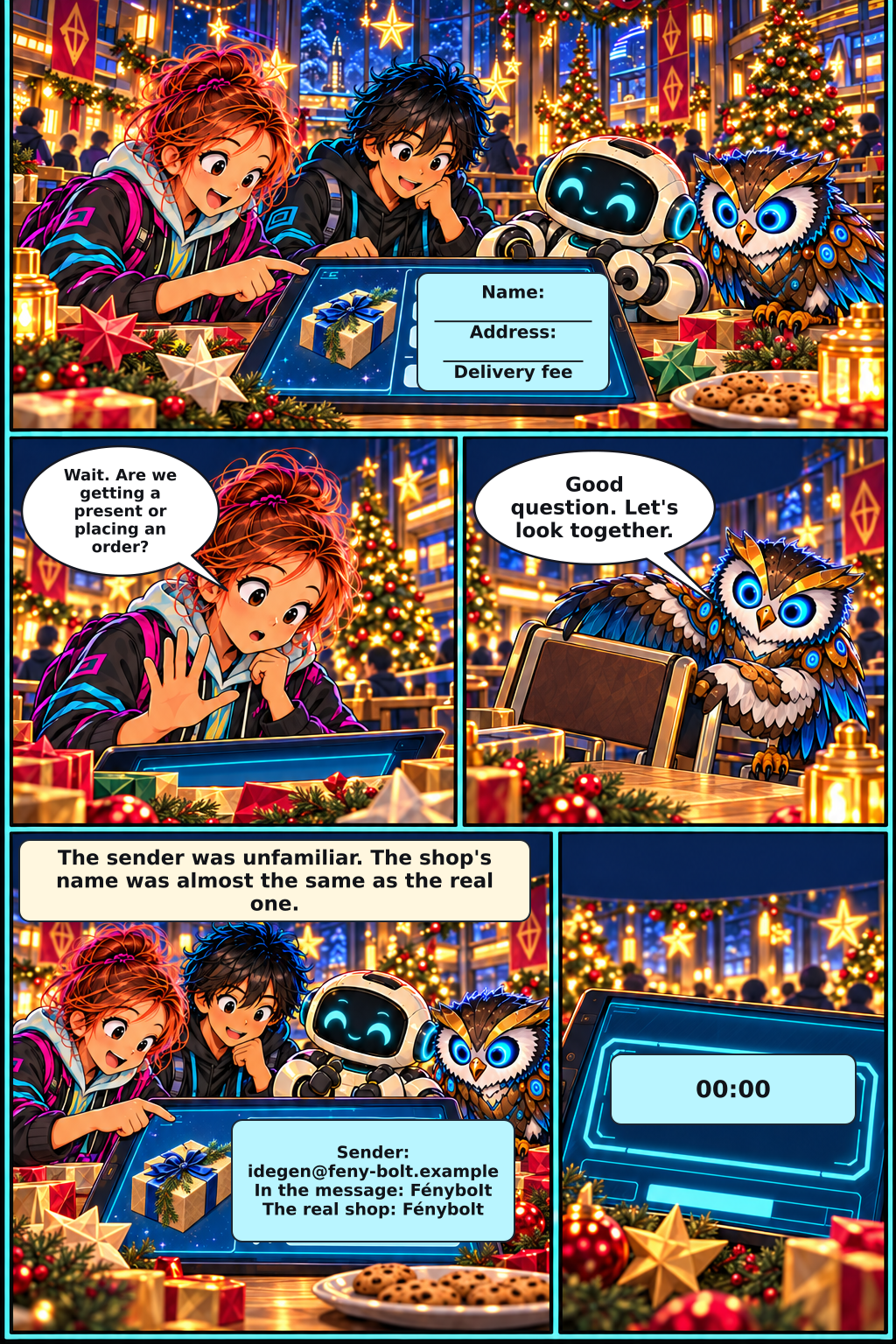
- When does the gift start to look more like an order?
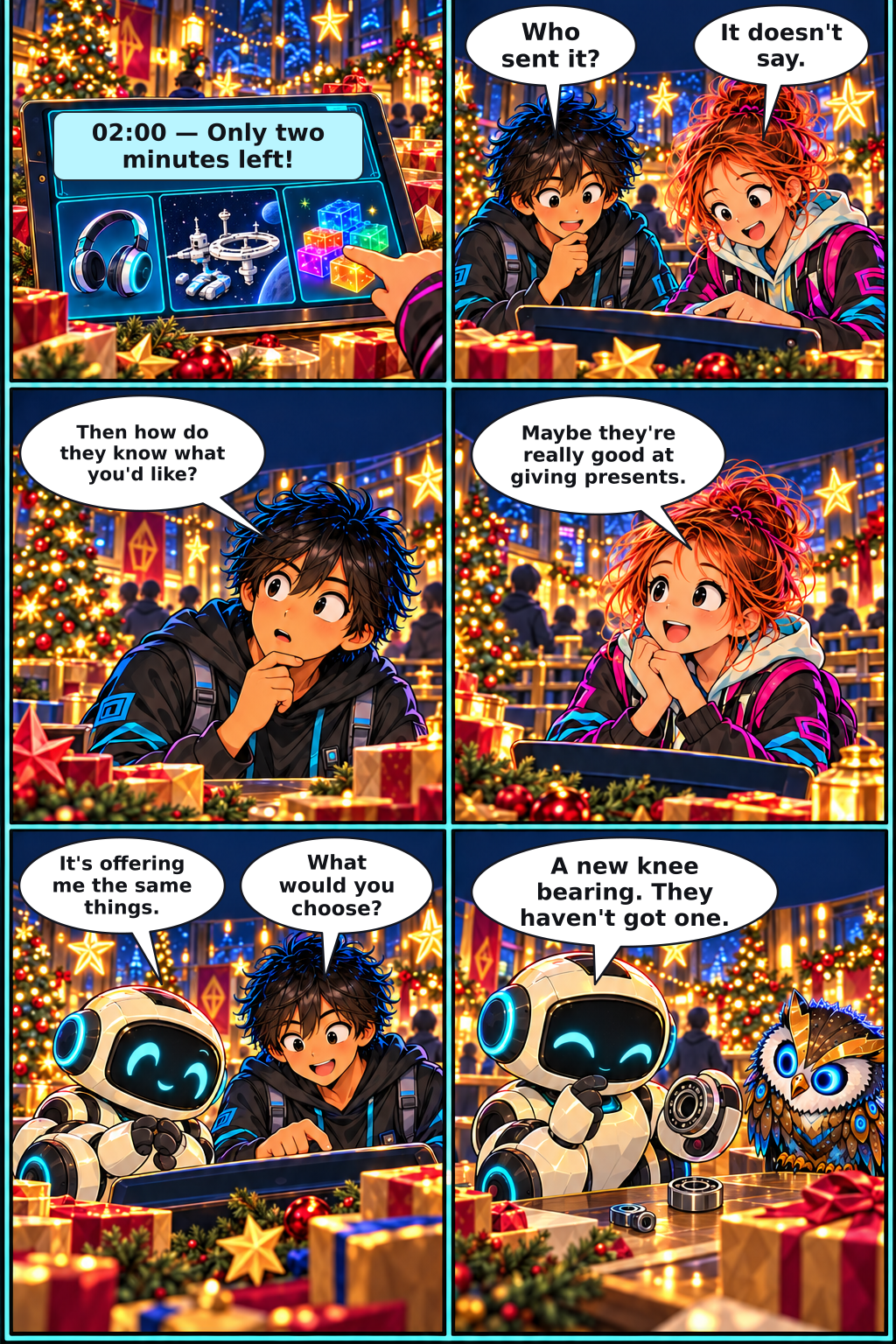
- What does the restarting countdown show?
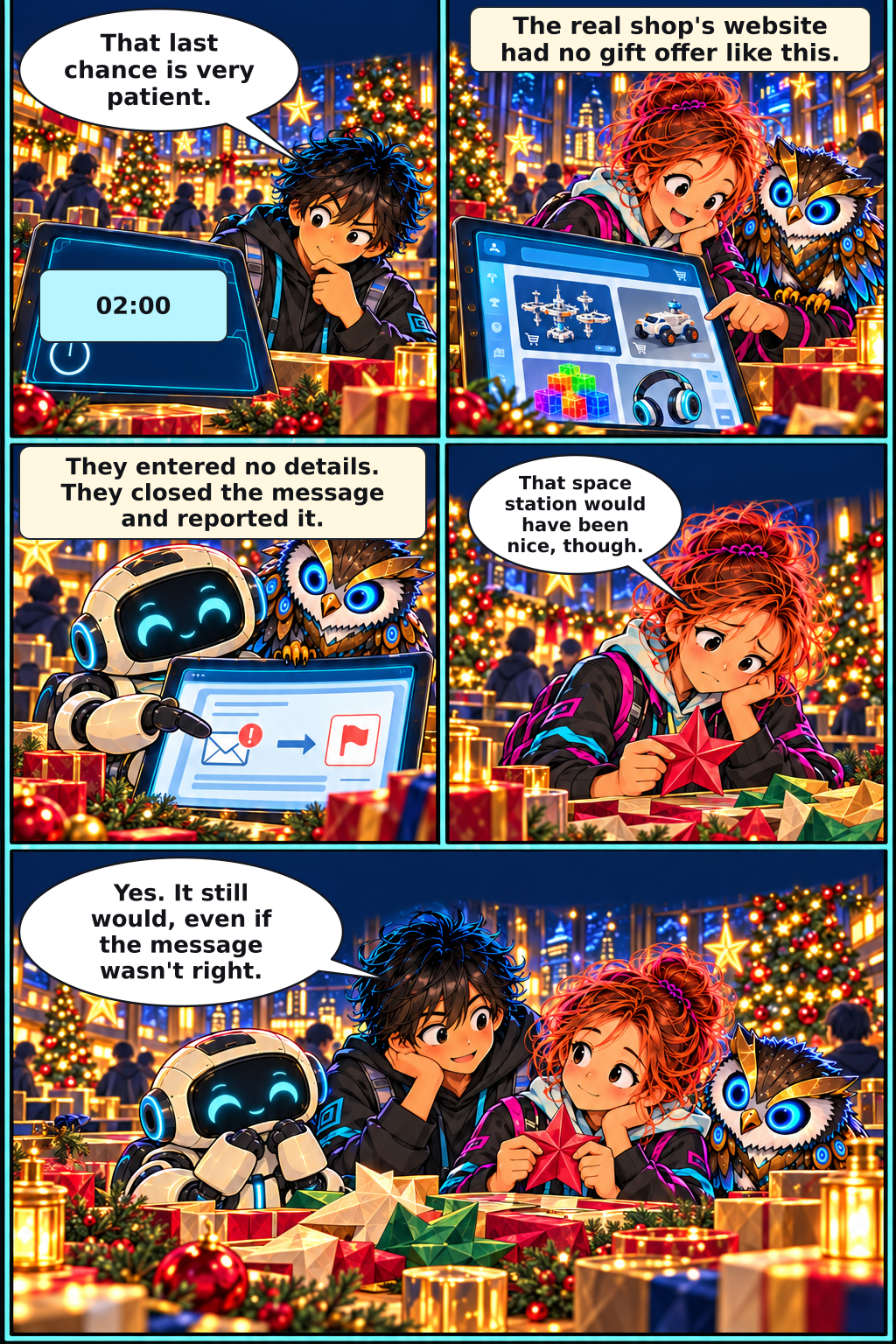
- How do they check the shop’s offer, and how does Miki respond to Lili’s disappointment?
Notes for the adult – not a fixed model answer
Requests for a name, address and delivery fee are reasons to pause and check. The restarting timer exposes the pressure. They open the known shop separately rather than relying on the message’s link. Miki acknowledges Lili’s disappointment. A single warning sign does not prove fraud in every situation.
Shorter version: choose one question. Longer version: compare two possible solutions.
To finish: name one clue from the story and one step you would try in a similar situation.
At home · 10 minutes
A way to start the conversation
I understand that you would have liked it. Even when a gift looks appealing, we can take our time and check it.
Discussion starters: When does the gift start to look more like an order? How do they check the shop’s offer, and how does Miki respond to Lili’s disappointment?
Try it together
Draw a fictional gift message and mark two things you would check. Do not enter real information or pay anything. If information or money has already been sent, the child should tell a trusted adult so they can take the necessary steps together.
Keep the discussion about the characters; no one has to share personal experiences. Passing is welcome and answers are not graded. Do not ask for real personal details. Asking for help should not lead to shame or automatic punishment.